Why Central Florida Humidity Causes Mold Problems in DeLand Homes
Deland sits in one of the most humid pockets of Central Florida. Here is why that humidity feeds mold inside your home, the warning signs, and how to stop it.
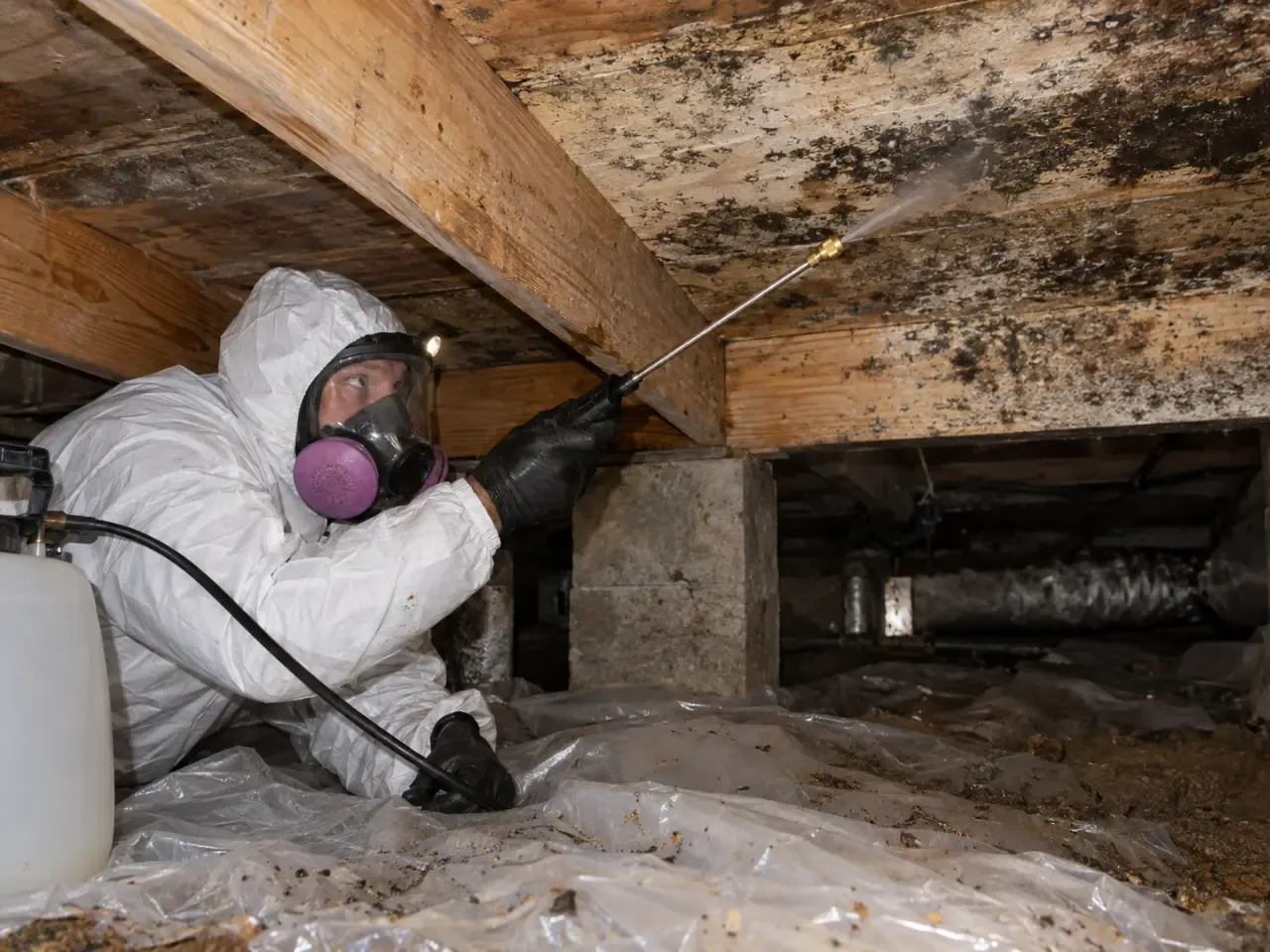
Central Florida humidity causes mold in Deland homes because the air inside your house stays above 60% relative humidity for weeks at a time, and mold only needs that damp surface plus 24 to 48 hours to start growing. Deland sits roughly 25 miles inland from Daytona Beach, so we get the ocean moisture without the steady coastal breeze that dries things out. That combination keeps indoor humidity high from April through October and gives mold a long, uninterrupted season to take hold.
Why Humidity Causes Mold in Deland Homes is really a story about three things: how much water is in the air, how well your house moves that air, and how often your AC runs. We are going to walk through each one, show you the signs we look for on inspections, and give you the fixes that actually work in this climate.
Why Central Florida Humidity Causes Mold in Deland Homes
Central Florida humidity causes mold in Deland homes because the outdoor dew point from May through September regularly sits between 70°F and 75°F, and any surface cooler than that dew point collects condensation. Your AC coil, your cold-water pipes, and the concrete slab under your flooring are all cooler than the air around them. When that moist air touches those surfaces, water beads up. Mold spores land on that film of water and colonize.
Deland averages about 52 inches of rain a year, with most of it falling in afternoon thunderstorms between June and September. Every storm pushes outdoor humidity to 90% or higher. If your windows and doors are not sealed tightly, that air migrates inside and your AC has to work harder to pull the moisture back out. On the days your system cannot keep up, indoor humidity climbs past 60% and stays there overnight.
We see this pattern constantly in older Deland neighborhoods where homes were built before modern vapor barriers were standard. If you want the full picture of what we do about it, our Mold Remediation Deland FL service covers inspection through final clearance.
What Indoor Humidity Level Encourages Mold Growth in Florida?
Mold growth in humid climates starts when indoor relative humidity stays above 60%, and it accelerates quickly once you cross 70%. The EPA and most indoor air quality professionals recommend keeping your home between 30% and 50% year-round. In Deland, hitting that target from June through September takes deliberate effort because the outdoor air is working against you every time a door opens.
Here is the practical breakdown we give homeowners:
- Below 50% RH: mold spores stay dormant. This is where you want to live.
- 50% to 60% RH: slow growth is possible on cool surfaces like window frames and exterior walls.
- 60% to 70% RH: active growth on drywall, wood trim, and fabric within a week.
- Above 70% RH: visible mold colonies can appear in 48 to 72 hours, especially in closets and bathrooms.
A $15 hygrometer from any hardware store will tell you where you stand. Put it in the middle of your living room, away from vents and direct sun, and check it at 7 a.m. and 4 p.m. for a week. If your morning readings are consistently above 55%, you have a moisture problem even if you cannot see mold yet.
Does Central Florida Humidity Make Mold Grow Faster?
Yes. Central Florida humidity makes mold grow faster than in drier climates because the air itself supplies the moisture mold needs. In Arizona or Colorado, mold usually needs a leak or a flood to get started. In Deland, mold can colonize a closet wall or the back of a sofa with no leak at all, just damp air and poor circulation.
The math is straightforward. Mold spores need three things: moisture, organic material, and temperatures between 60°F and 80°F. Deland delivers all three for most of the year. Our average July high is 92°F, but indoor temperatures sit right in that 72°F to 78°F band where mold thrives. Combine that with 60% to 80% indoor humidity and you have ideal growing conditions inside a sealed house.
We have pulled mold off the north-facing walls of Deland homes in July that had no plumbing leak, no roof leak, and no visible water damage. The only moisture source was the air. That is how common humidity-driven mold is here.
Signs of Humidity-Related Mold in a Deland House
Signs of humidity-related mold in a Deland house usually show up before you see any black spots. The first clue is smell: a musty, earthy odor in a bedroom or hallway that does not go away after you clean. That smell is microbial volatile organic compounds, and it means mold is active somewhere nearby.
Other signs we look for during a Mold Inspection Deland FL:
- Condensation on the inside of windows in the morning, especially in bedrooms.
- Warped or bubbling paint on interior walls, particularly on exterior-facing walls.
- Closet corners that feel damp or have dark staining on the drywall.
- Allergy symptoms that get worse when you are home and better when you travel.
- Wood furniture or baseboards that feel soft or spongy.
- Peeling wallpaper or a musty smell coming from behind it.
If you notice two or more of these, the humidity in your home is probably high enough to support mold growth. A moisture meter and a quick visual inspection will confirm it.
Why Mold Grows After Humid Weather in Deland
Mold grows after humid weather in Deland because the moisture does not leave when the storm does. After a week of afternoon thunderstorms, the walls, carpets, and furniture in your home absorb water vapor from the air. That stored moisture keeps interior humidity elevated for days, even after the sun comes back out.
We see this most often in late September and October, right after the rainy season winds down. Homeowners turn off their AC for the first time in months, open the windows to enjoy the cooler air, and accidentally let in one last wave of humid air. Within a week, they are calling us about a musty smell in the guest room.
The same thing happens in homes across Mold Remediation in Victoria Park, where larger floor plans and high ceilings mean more air volume for the AC to condition. If your system short-cycles or your thermostat fan is set to AUTO, the air in those big rooms can sit stagnant and damp for hours.
How to Reduce Indoor Moisture in a Deland Home
How to reduce indoor moisture in a Deland home comes down to three moves: keep the AC running, seal the envelope, and dry out the spaces your AC cannot reach. None of these require a major renovation, and most cost less than $300 total.
Run Your AC Correctly
Set your thermostat to 74°F to 76°F and leave the fan on AUTO, not ON. When the fan runs continuously, it re-evaporates water off the coil and pushes that moisture back into your air. During the rainy season, do not turn the system off during the day. If you want to save money, raise the set point to 78°F instead of shutting it down.
Seal Doors and Windows
Replace worn weatherstripping on exterior doors and check the seals around windows. A quarter-inch gap under a door lets in as much humid air as leaving a window cracked. New weatherstripping costs about $20 per door and takes 15 minutes to install.
Use Standalone Dehumidifiers in Problem Rooms
Closets, laundry rooms, and garages do not get enough AC airflow. A 30-pint dehumidifier in a closet or a 50-pint unit in a garage will keep those spaces below 50% RH. Empty the reservoir daily or run a drain line so you do not have to think about it.
Fix the Small Leaks Before They Become Mold
A dripping shower head, a slow toilet leak, or a pinhole in a supply line adds moisture to your home 24 hours a day. We handle the cleanup side of this with Structural Drying and Dehumidification Deland FL, but the plumbing repair itself is a job for a licensed plumber.
Keep Gutters and Grading Working
Water that pools against your foundation wicks up through the slab and into your flooring. Clean your gutters twice a year and make sure the soil slopes away from the house at a rate of about 6 inches over the first 10 feet.
Common Mistakes Deland Homeowners Make With Humidity
The biggest mistake we see is treating humidity like a summer-only problem. In Deland, indoor humidity can stay above 60% well into November, and we get calls every fall from homeowners who turned off their AC in October and found mold in a closet by Thanksgiving.
Other mistakes that make mold worse:
- Running the AC fan on ON instead of AUTO. This recycles moisture back into the air all day long.
- Closing off unused rooms. Shut bedrooms get no airflow, so humidity climbs and mold starts on the walls behind furniture.
- Using a humidifier in the winter. Deland winters are mild, and adding moisture to a house that already sits at 55% RH is asking for trouble.
- Painting over mold instead of removing it. Paint traps the mold against the drywall and hides the problem until it spreads.
- Ignoring a musty smell because you cannot see mold. By the time mold is visible, it has usually been growing for weeks.
- Drying a water leak with a fan and a towel. That handles the surface water but leaves the wall cavity and subfloor damp.
If you have already made one of these mistakes, do not panic. Most humidity-driven mold in Deland homes is confined to a small area and can be remediated in a single day.
When to Call a Professional
Call a professional when the mold covers more than 10 square feet, when you can smell it but cannot find it, or when anyone in the house has asthma or a compromised immune system. Those three situations are past the point where a bottle of bleach and a scrub brush will solve the problem.
We handle humidity-related mold across Deland every week. Our team starts with a Mold Testing Deland FL visit to confirm what is growing and where the moisture is coming from, then removes the mold and dries the structure. For larger jobs, we bring in HEPA Air Filtration Deland FL to keep spores out of the air while we work. If the mold has damaged drywall or trim, we rebuild it through our Mold Damage Repairs and Reconstruction Deland FL service so you are not left hiring a second contractor.
We also work with homeowners in Mold Remediation in Glenwood, where mature trees shade the north side of many homes and keep exterior walls cooler and damper than the rest of the house.
Frequently Asked Questions
Why does humidity cause mold in Deland homes?
Deland's outdoor dew point sits between 70°F and 75°F for roughly five months a year, so indoor surfaces stay cool enough to collect condensation. That film of water plus organic material like drywall paper or dust is all mold needs to start growing, usually within 24 to 48 hours.
What indoor humidity level encourages mold growth in Florida?
Above 60% relative humidity, mold growth becomes likely. Above 70%, visible colonies can appear in 48 to 72 hours. Keep your Deland home between 30% and 50% RH year-round, and check it with a hygrometer at least twice a day during the rainy season.
How can I tell if humidity is causing mold in my Deland house?
A musty smell that returns after cleaning, condensation on interior windows, and allergy symptoms that improve when you leave home are the three strongest signs. A moisture meter reading above 16% on drywall or wood confirms it. If you see dark staining in a closet corner, mold is already active.
Does Central Florida humidity make mold grow faster?
Yes. In drier climates, mold usually needs a leak or flood to start. In Deland, humid air alone can feed mold because indoor temperatures sit between 72°F and 78°F and humidity stays high for months. That combination can cut the time to visible growth from weeks down to days.
How can Deland homeowners reduce moisture indoors?
Run your AC at 74°F to 76°F with the fan on AUTO, seal exterior doors and windows, and use standalone dehumidifiers in closets and garages. Fix any slow leaks quickly, clean gutters twice a year, and keep soil sloping away from the foundation. Most of these fixes cost under $300 total.
Get Help With Mold Remediation in Deland
If you have found mold in your Deland home or you just cannot get the musty smell out, we can help. Our team inspects, tests, removes the mold, and dries the structure so it does not come back.
Call Deland Mold Pros at (386) 649-7445 to schedule a moisture assessment and get a straight answer about what is growing in your house.