Mold Prevention Tips for Older Homes Near Downtown DeLand
Older DeLand homes near downtown trap moisture in ways new builds don't. Here's how to prevent mold with practical moisture control and ventilation fixes.
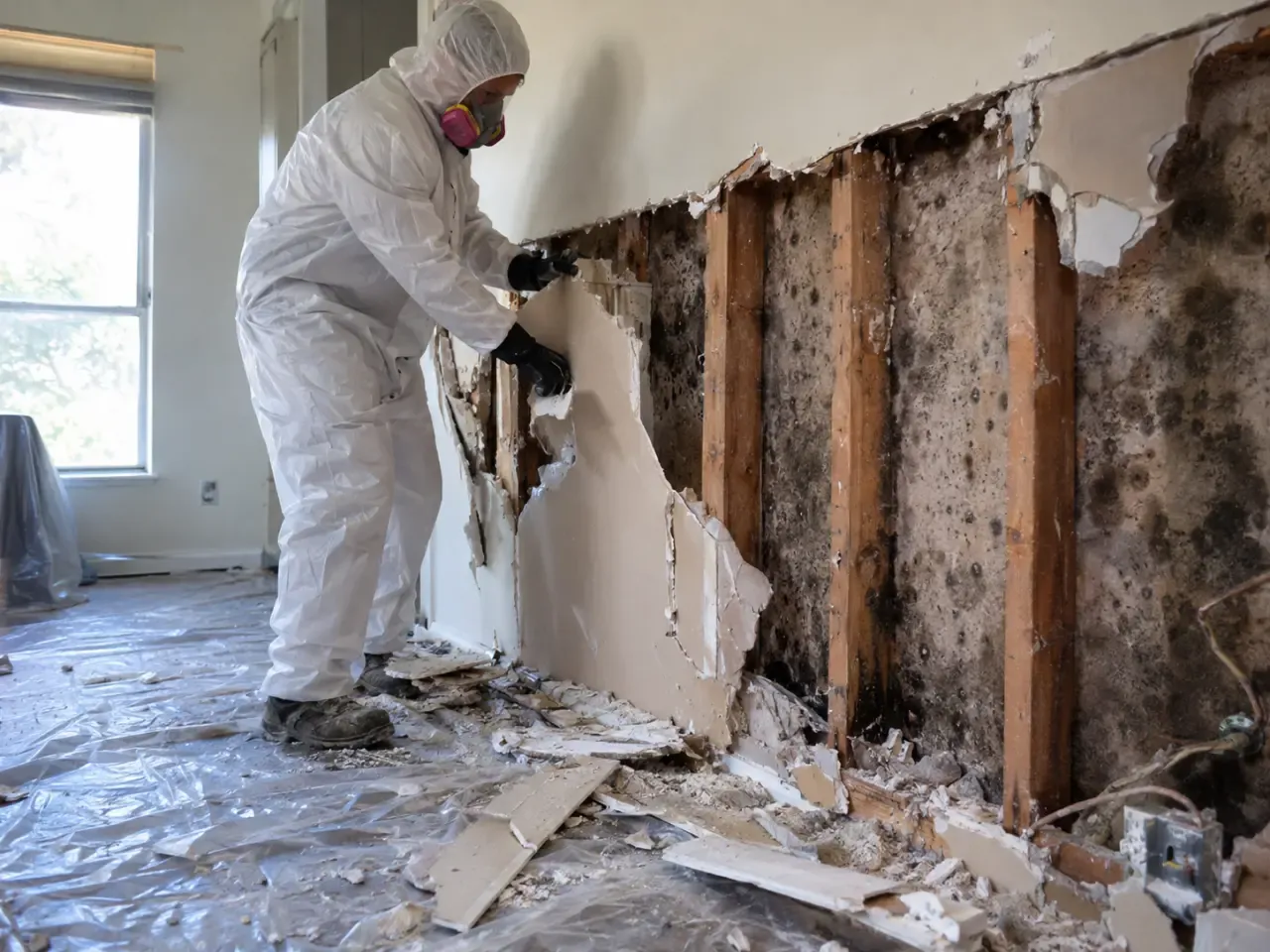
Mold prevention for older homes in Deland comes down to three things: stopping water intrusion, keeping indoor humidity under 60%, and ventilating the rooms where moisture collects. Homes built before 1980 near downtown DeLand - with their original windows, pier-and-beam foundations, and undersized attic vents - fail at all three more often than newer construction. This guide walks through the specific fixes we use on houses in and around the historic districts, from the 1920s bungalows off Woodland Boulevard to the mid-century ranches closer to Stetson.
If you own one of these homes, you already know the quirks: doors that stick in July, a musty smell in the hall closet, condensation on the inside of single-pane glass. Those are moisture signals, not character. Left alone, they turn into mold colonies within 48 to 72 hours of a leak or a humid stretch.
Why Older DeLand Homes Are More Vulnerable to Mold
Older DeLand homes are more vulnerable to mold because their building materials, ventilation, and plumbing were designed for a drier, less air-conditioned Florida. Volusia County averages 50 to 55 inches of rain a year, and summer relative humidity routinely sits between 75% and 90%. A house built in 1955 with no vapor barrier under the floor and a single attic gable vent has almost no defense against that.
Here's what we find again and again on pre-1980 homes near downtown:
- No vapor barrier in the crawlspace. Ground moisture wicks up into floor joists and subfloor sheathing. Wood stays above 20% moisture content - mold's happy zone.
- Single-pane windows and original doors. Condensation forms on the interior glass every cool morning from November through February, dripping onto sills and into wall cavities.
- Galvanized or early copper supply lines. Pinhole leaks behind cabinets go unnoticed for weeks.
- Undersized attic ventilation. One gable vent and no soffit vents traps heat and moisture in the attic, which then migrates down through ceiling penetrations.
- Cast iron drain lines. These crack at the hub and seep into the slab or crawlspace.
Add a modern, tightly sealed air-conditioned interior to that shell and you've created a moisture trap. The AC cools the air, the old envelope can't dry out, and mold finds the wet spots. We see this pattern in every neighborhood we work in, from Mold Remediation in Victoria Park to the smaller blocks closer to downtown.
How Do I Prevent Mold in an Older Home in Deland?
You prevent mold in an older DeLand home by controlling moisture at the source: fix leaks within 48 hours, keep indoor humidity between 45% and 55%, and ventilate bathrooms, kitchens, and crawlspaces. Everything else is secondary. If you do those three things consistently, you will not grow mold - even in a 1920s house with original wood siding.
Start with a moisture baseline. Buy a $15 to $30 digital hygrometer and place it in the central hallway. Check it at 7 a.m. and 7 p.m. for a week. If it reads above 60% indoors, you have a humidity problem before you have a mold problem. That's the number to fix first.
Next, walk the house after a hard rain. DeLand gets most of its rain between June and September, but October and November cold fronts bring wind-driven rain that finds old flashing failures. Look for water stains on ceiling drywall, bubbling paint on window frames, and damp spots on the bottom of exterior doors.
Finally, treat every slow drip as urgent. A faucet that drips once every 10 seconds wastes about 3 gallons a day, and more importantly it keeps the cabinet base wet. Under-sink cabinets in older homes are the single most common place we find hidden mold growth - usually on the back wall of the cabinet, behind the plumbing.
Moisture Control for Historic Houses in Deland, Florida
Moisture control for historic houses in Deland, Florida means dealing with both the outside water and the inside humidity. Historic homes were built to breathe - they relied on air movement through walls and floors to dry out. Modern air conditioning and weatherstripping shut that airflow down, so you have to replace it mechanically.
Crawlspace and Foundation
If your house sits on a pier-and-beam foundation - common in the older blocks near Stetson University - install a 6-mil polyethylene vapor barrier over the bare ground. Overlap the seams 12 inches and run the plastic 6 inches up the piers. This alone can drop crawlspace humidity by 20 to 30 percentage points. Add a small dehumidifier rated for the square footage and drain it to the exterior.
For slab-on-grade homes, check the perimeter for cracks and failed caulk joints. Water entering at the slab edge wicks up into the bottom plate of the wall framing. That's where we find hidden mold behind baseboards.
Roof and Attic
Older DeLand roofs often have one or two gable vents and no ridge or soffit ventilation. That's not enough. A 1,500-square-foot attic needs roughly 1 square foot of net free vent area per 150 square feet of attic floor - that's about 10 square feet of venting, split between intake (soffit) and exhaust (ridge or gable). If you're re-roofing, add ridge vent and soffit vents at the same time. It's the cheapest moisture fix you'll ever make.
While you're up there, look for dark staining on the roof sheathing. That's usually the first sign of condensation-driven mold in an older attic.
Interior Humidity
Run the air conditioner from April through October, not just when it's hot. The AC removes moisture as a byproduct of cooling. Set the thermostat at 74°F to 76°F and leave the fan on auto, not on - a fan on continuous run re-evaporates water off the coil and pushes humidity back into the house.
If you keep the house closed up in winter, watch for condensation on the inside of windows. That's a sign indoor humidity is too high. Crack a window for 10 minutes in the morning or run a standalone dehumidifier in the central hallway.
If you'd rather hand the whole moisture problem to someone who does it every day, our Mold Prevention and Moisture Control Deland FL service covers crawlspace encapsulation, dehumidifier sizing, and ventilation upgrades in one visit.
Improving Ventilation in Older Central Florida Homes
Improving ventilation in an older Central Florida home starts with the three rooms that generate the most moisture: the bathroom, the kitchen, and the laundry. If those three spaces vent properly to the outside, you eliminate the majority of indoor moisture problems.
Check the bathroom exhaust fan first. Hold a tissue against the grille while the fan runs. If the tissue doesn't stick, the fan is moving almost no air. Older fans often rated at 50 CFM or less, and many were vented into the attic instead of through the roof - which dumps moisture straight into the attic. Replace it with a 110 CFM fan and run it for 20 minutes after every shower.
In the kitchen, the range hood should exhaust outdoors, not recirculate. Boiling pasta for 10 minutes adds roughly a pint of water vapor to the air. A recirculating hood just spreads it around.
For the whole house, the goal is a slight positive pressure with dry air. That means fixing return-air leaks in the attic, sealing duct joints with mastic, and making sure the AC filter is clean. A dirty filter drops airflow, which raises indoor humidity by several points.
If your home has a whole-house fan - common in 1960s and 1970s DeLand builds - use it only when outdoor humidity is below 60%. Running it on a humid July evening pulls moisture into every wall cavity.
What Should Deland Homeowners Inspect to Prevent Mold?
Deland homeowners should inspect five areas every season: under every sink, around the water heater, the attic sheathing above the bathrooms, the crawlspace, and the window sills on the north and east sides of the house. Those are the spots where moisture shows up first in older homes.
Here's the seasonal checklist we give our own clients:
- Under sinks and behind the toilet - look for dark staining on the cabinet floor or swollen particleboard. Check the supply line fittings with a dry paper towel.
- Water heater pan and T&P valve - a slow weep from the temperature-pressure valve runs down the tank and soaks the floor. Check monthly.
- Attic sheathing above bathrooms - a failed exhaust duct shows up as dark streaks on the roof deck within a few months.
- Crawlspace joists and subfloor - shine a flashlight on the wood. White or gray fuzzy growth means mold is already there.
- Window sills and door frames - soft wood, peeling paint, or a musty smell means water is getting in from outside.
If you want a second set of eyes, our Mold Inspection Deland FL service includes moisture-meter readings on every wall and a written report with photos. We also offer Mold Testing Deland FL when you need lab confirmation of what's growing and whether it's toxic.
Common Mistakes That Lead to Mold in Aging Houses
The biggest mistake we see in aging houses is painting over water stains instead of finding the leak. Stain-blocking primer hides the evidence, but the moisture keeps feeding the mold behind the drywall. Six months later the stain comes back and so does the mold.
Other mistakes that show up on our job sites:
- Running the AC fan continuously. It re-humidifies the house. Set it to auto.
- Closing off unused rooms. A closed bedroom in a Florida summer turns into a humidity chamber. Leave doors open or run a small dehumidifier.
- Using a humidifier in winter. DeLand winters are mild and damp. You almost never need added humidity here.
- Ignoring a musty smell. A musty odor means active mold growth somewhere, even if you can't see it. It usually lives in the crawlspace, the attic, or inside a wall cavity.
- Bleaching visible mold on porous surfaces. Bleach kills surface mold on tile, but it doesn't penetrate drywall or wood. The mold comes back within weeks.
- Letting the crawlspace stay open to the outside. Vents that were once code-required now pull humid Florida air into the crawlspace. Seal them and condition the space instead.
One more: waiting. Mold doubles in coverage roughly every 24 to 48 hours when moisture is present. A leak found on Monday is a small job by Wednesday and a reconstruction project by the following week.
When to Call a Professional
Call a professional when the mold covers more than 10 square feet, when you smell mustiness but can't find the source, or when the mold keeps coming back after you've cleaned it. Those three situations point to hidden moisture that a homeowner can't reach without opening up the wall or floor.
We handle this every week in DeLand. Our team finds the moisture source, contains the affected area, removes the mold, and dries the structure before we close anything back up. If the damage is in the living space, our Residential Mold Remediation Deland FL service covers everything from containment to final clearance. For rental properties, small commercial buildings, and the older mixed-use buildings downtown, we run the same process under our commercial division.
If you're not sure whether you have a problem, start with an inspection. It's cheaper than guessing and far cheaper than rebuilding a wall.
Frequently Asked Questions
How do I prevent mold in an older home in Deland?
Keep indoor humidity between 45% and 55%, fix any leak within 48 hours, and ventilate bathrooms and kitchens to the outside. Install a crawlspace vapor barrier if you're on a pier-and-beam foundation. Those three steps prevent the vast majority of mold growth in DeLand's climate.
Why are older homes more vulnerable to moisture problems?
Older homes lack vapor barriers, have single-pane windows that condense water, and were built with ventilation designed for a drier climate. Their plumbing is also older - galvanized lines and cast iron drains leak slowly and often go unnoticed for weeks. Modern air conditioning seals the house tighter, trapping that moisture inside.
What should Deland homeowners inspect to prevent mold?
Check under every sink, around the water heater, the attic sheathing above bathrooms, the crawlspace joists, and window sills on the north and east sides. Do this once per season. A $20 moisture meter from any hardware store makes the job faster and more accurate.
How can I improve ventilation in an older Florida home?
Replace bathroom exhaust fans with 110 CFM units vented through the roof, make sure the kitchen range hood exhausts outdoors, and add soffit and ridge vents if your attic only has gable vents. Run the AC fan on auto, not continuous, to avoid re-humidifying the house.
Does a musty smell mean an older house has hidden mold?
Yes, in almost every case. A musty odor is the smell of active mold growth, usually in a crawlspace, attic, or wall cavity where you can't see it. If the smell is strongest in one room, the mold is likely in the wall or floor of that room. Call for an inspection before it spreads.
Get Help with Mold Remediation in Deland
If your older DeLand home has a musty smell, a water stain that keeps coming back, or visible mold you can't get rid of, we can find the source and fix it. We work on historic homes, mid-century ranches, and everything in between across the downtown DeLand area.
Call Deland Mold Pros at (386) 649-7445 to schedule an inspection. We'll tell you what we find, what it costs to fix, and how to keep it from coming back.